Goose Eggs, Chips and Red Dice
[link—standalone]
I've recently gone through a terrible experience.
It's hard to look back on bad things from the past when they are not solved, and the tricky thing about life is that you don't get to choose what gets or does not get solved. A very cynical person can look at every single choice as a matter of probability. Do not what your heart, conscience and reason tell you to, but what is safest—take the road that has the fewest obstacles, the smoothest run possible.
That's no way of living. In Norm Macdonald's view, the gambling addict seems to understand this:
if you are at the table and you're rolling them bones, then there's no money in playing it safe. You have to take all your chips and put them on double six and watch as every eye goes to you and then to those red dice doing their wild dance and freezing time before finding the cruel green felt.
There are times in life when adventure calls you. The burning bush reveals your choices and you have to take a stance, neither of which being guaranteed to be painless. And sometimes you make a choice that basically destroys you for no reason. You are sure you're doing the right thing and picking the winning horse, but things don't go your way, and you find yourself hanging by the foot from a birch tree over a river of lava, to borrow an image from Bob Dylan. How does it feel?
My solution for dealing with terrible things that seem to have no explanation is that of grief.
You are not going to find an explanation, there are powers above that you cannot comprehend and you shouldn't even have the hubris to try to do so. Some things happen for reasons that are beyond you and tragedies happen for reasons that are beyond you. Trying to reason your way through tragedies might be the single worst thing someone can do if it holds them close forever to such pains. What good is understanding anything if you're destroyed in the process?
Listening to Joanna Newsom's "Goose Eggs", from what I consider to be her most positive album, Divers, I have always been attached to a very specific line:
What's redacted will repeat.
Dealing with people is hard, and breakups are even harder. Ideally, things should be sorted out and discussed, after all, that which you avoid discussing will not disappear but just manifest in different, newer, and more sinister ways. What is redacted will repeat. But any sort of breakup involves two people, and if one person doesn't want to discuss something, redaction is the only option. The fog will forever obscure the vision for both. In this sadder case, I can only see one option.
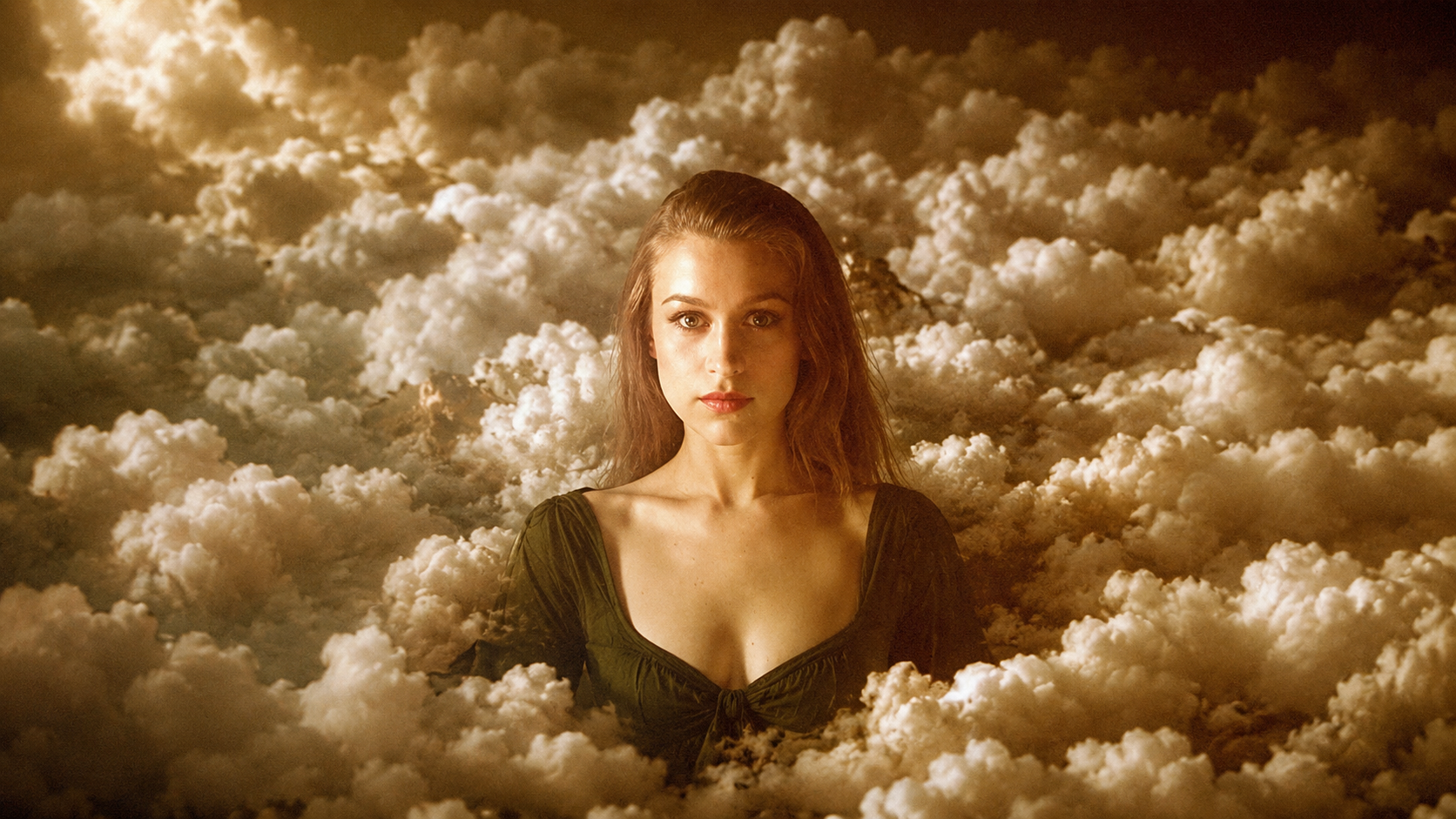
Grieve. Grieve the loss. Be it that of a friendship, of a love or both, grieve. They're not coming back except for a miracle. Miracles do happen, though.
In a very interesting song among his catalog, Bob Dylan sings
Now there's a wall between us, something there's been lost
I took too much for granted, I got my signals crossed
The beauty of a personal relationship is often taken for granted when, in reality, it's a deep connection that involves a certain degree of intimacy and vulnerability. Once the wall is up, though, I tend to think it's impossible to recover what's been lost.
But what if you never make the choice out of fear of such a wall? Kierkegaard's aesthetic man famously said that there is no hope and you will regret both. But the aesthetic man merely fears discomfort, particularly that of boredom, which is certainly not the final evil. What if we are actually striving for something more, though?
Let's look back to the gambling addict's mind through Norm. "As you place your chips on the table, you feel anxiety and impatience", he says, and winning is not the point at all, for it only grants relief. The gambler's looking for something else:
It is after the red dice are thrown but before they lie still on the green felt where they fall. It is when the dice are in the air, and as long as they are there, time stops. As long as the red dice are in the air, the gambler has hope. And hope is a wonderful thing to be addicted to.
Shouldn't all of us be hopeful? Shouldn't all of us want to live a peaceful, meaningful life? Wrong as the gambler might be, he has the courage that many of us lack, the courage to hope.
Joanna Newsom's Divers has a cliché leitmotif of cycles—a leitmotif of leitmotifs!—and as I said I consider it to be her most positive album. Take "Time, as a Symptom", which suggests how eternity can be taken from love:
Love is not a symptom of time,
Time is just a symptom of love
(and of the nullifying, defeating, negating repeating joy of life!)
Is there anyone who shouldn't be striving for this blissful monotonous joy?
It has to be said, however, that it is also true that we can get stuck in the repetition of that which is redacted and will forever torment us. That is the gamble.
The past might not be solved, but why deprive yourself of your own future? I'd advise anyone to grieve their losses, take the red dice, hope and shoot. We've all had too much sorrow.
God, I wish I'd take my own advice.
sáb, 06 jun 2026 00:18:56 -0300
On Frankenstein
[link—standalone]
I'd read Mary Shelley's classic almost 10 years ago and I remember finding it a good book. I felt sorry for Frankenstein's monster but, in a more cynical take, focused on seeing how people in my online social circles seemed a lot like him.
Although my younger self was quite impressed with the book, I do not share much of that now. The male characters are clearly woman-like — from this book, I'd say Mary Shelley was not good at writing men. The way Victor acts is the way a very romantic woman would want a man to act when faced with tragedy. Most characters are quite predictable, too. Elizabeth, Clerval, and all the others are characters written to be quite similar. All of them have a very specific purpose in the narrative: moving Victor to suffer the most.
But I accept that. The monster, after all, is the real highlight.
There are many Frankenstein's monsters in the real world, or at least many with his psychology. Even though my joke about online circles could be summed up to "tfw no gf", it's deeper than that. The absence of a woman is not the monster's actual problem. You can easily see that through the De Lacey family. The monster idealized the life of average peasants, struggling through life, and yearned for the moment when they would accept him in spite of his physical wretchedness.
Of course, other than the blind elder, no one could get past his looks and see the kind and gentle creature that he once was. He was repulsive.
No one in their right mind would want to associate with that much of an outcast because, even if he was indeed acting in a good manner, it could only be due to evil schemes and ideas. He has to be fooling you, just look at him!
It's easy to empathize with the monster, but I believe most people would not be able to actually do it if it happened before their eyes. The halo effect has been known for over a century, making us assume that one positive trait, such as beauty, is necessarily correlated with other positive traits, such as morality. Frankly, to some extent this phenomenon is justified, as beauty is an aspect of wholesomeness and wholesomeness is an objectively positive trait, not to mention that a good appearance can signal biological traits of health or fitness in general, but it can hardly be the only dimension of analysis.
But the effect that is the most interesting to me is how the rejection blackens the heart of one who is ugly. In the monster's words,
Everywhere I see bliss, from which I alone am irrevocably excluded. I was benevolent and good; misery made me a fiend. Make me happy, and I shall again be virtuous.
At the end of the day, Frankenstein's monster proves that one cannot live without a social life. We are social animals, and we would be even if we were man-made abominations. As soon as we are conscious, we crave for warmth of companionship and, if that is denied, like the monster we have only our own makers to rebel against.
The rejects of society resent the ones who made them that way. They may have been benevolent and good; misery made them into fiends.
Although we can often identify with the monster's feelings, how many times did we actually see ourselves in the other end? How many people do we not like from their looks and generalize it through leaps of logic that make us despise their very being and everything they represent? Are we not close to the people who made him who he became?
Do we even suffer the same way that he does, or do we choose our own suffering by rejecting the hands that people offer us? Don't we prefer, at times, to reject the help that God sends us and "to rage against everything and be the one whom the whole world, all existence, has wronged"?
Are we not usually seduced by the idea of being an outcast, a damned person forever rejected and, therefore, justified in revenge? Even when we do not act upon this vengeful sentiment, do we not pat ourselves on the back for being such good people for not acting on it?
Often, yes, we are. Are we really rejected by everyone or do we just like the aesthetics of being a pure-but-damned soul?
There are many monsters who feel their happiness has been negated by society, and they are aware of what that would entail, and once the line is crossed, there isn't much holding them back from more and more degradation.
Once I falsely hoped to meet with beings who, pardoning my outward form, would love me for the excellent qualities which I was capable of unfolding. I was nourished with high thoughts of honour and devotion. But now crime has degraded me beneath the meanest animal. No guilt, no mischief, no malignity, no misery, can be found comparable to mine. When I run over the frightful catalogue of my sins, I cannot believe that I am the same creature whose thoughts were once filled with sublime and transcendent visions of the beauty and the majesty of goodness. But it is even so; the fallen angel becomes a malignant devil. Yet even that enemy of God and man had friends and associates in his desolation; I am alone.
Do these monsters not deserve our fair judgement?
ter, 10 mar 2026 22:10:56 -0300
The white stain of the man in black
[link—standalone]
Once again I catch myself thinking about the man in black.
A student once told me that I seemed to be fascinated with the theme of violence. Guilty as charged. That happened because I started discussing the book The Giving Tree and went into Shel Silverstein's ghostwriting work for Johnny Cash in the masterful song "25 Minutes to Go", where a prisoner counts his last minutes before meeting the gallows, and I had already previously discussed themes of violence in culture mostly using Ted Gioia's Music: A Subversive History as a source. It's not untrue. Violence is a taboo in culture, and as with any other taboo, it doesn't go away by pretending it does not exist in our daily lives.
Johnny Cash was not a gangster in any way, even if his cultural image might suggest so. Yes, he did have some passages in prison, but most of them were not serious. Actually, one of them was notoriously due to trespassing to pick some flowers on someone else's property. The other, however, still shows the scars of a man who's been through some things. At different points of his life, Cash was addicted to different substances, both downers and uppers, amphetamines (speed) and tranquilizers. Even worse, his alcoholism used to make the other addictions even worse. He never shied away from it.
He was not a violent person, but his violent personal imagery reflected in his work. Arguably his biggest song, "Folsom Prison Blues", tells the story of a man who shot another due to sheer boredom, "just to watch him die". As we all know, boredom is the root of all evil, so it should not surprise us that a bored man would do such a thing.
The narrator of the song is not a good guy that suffered some sort of injustice. Far from it, he's a villain, and he knows it. He is constantly reminded of his mistakes and how he threw it all away just to get a short rush of adrenaline. Yet, Cash makes us feel for him — it's not that hard to imagine ourselves being violent for the sake of not dealing with the deadly empty space of boredom. Doesn't silence judge us? Anything, but judgment! Do not dare to make me feel small! Anything but this hellish, finger-pointing boredom!
The contrast between Cash's life and the beauty he could find and perform — even in the most unexpected of places! — reminds me of a Tom Waits quote made immortal by Blank on Blank's animation. Regarding the constant stimulus presented by New York, often decadent, ugly and unwholesome to say the least, he says
I think it's good. It fractures you a little bit, or (...) I think it's stimulating for artists because if you're visually susceptible to images as optically, it's constantly bombarding you with a lot of information if you can take it without becoming part of it.
Cash took that information and ran with it. At times, he became part of it. It's not hard to see him giving in and turning into the character of "Cocaine Blues", one of his hits from his live album At Folsom Prison of 1968. The help of his muse June Carter was absolutely necessary, given that nobody is completely independent, but he did it. Ah, did he do it.
Prison may be seen nowadays by the law-abiding citizen as some sort of playground for violent men, but it wasn't always like that. The characters from traditional songs were violent and they had some conscience of the moral code they were trespassing, there wasn't the idea of a romantic criminal, kind of like the prisoners from Dostoevsky's Notes from a Dead House, his quasi-memoir of the long years in prison. And much like in Dostoevsky's book, Cash shows us how close the criminal is to the everyday guy, in their virtues, their flaws and their remorse. That jolt of excitement of killing someone is not worth it.
If you peek into traditional music, themes of love (or sex) and violence are abundant. But what might be left unseen but still catches my attention in "Folsom Prison Blues" is the world building. "I hear the train coming, it's rolling around the bend," he sings. The sound of trains is nostalgic in itself.
I rode a train once in my life, in Minas Gerais, going from Belo Horizonte to Governador Valadares, to the marriage of two dear friends. There is something inherently nostalgic about trains. I had never ridden one before, yet seeing the "serrinha" filled my heart for a nostalgia for something I had not yet lived, to quote the footballer.
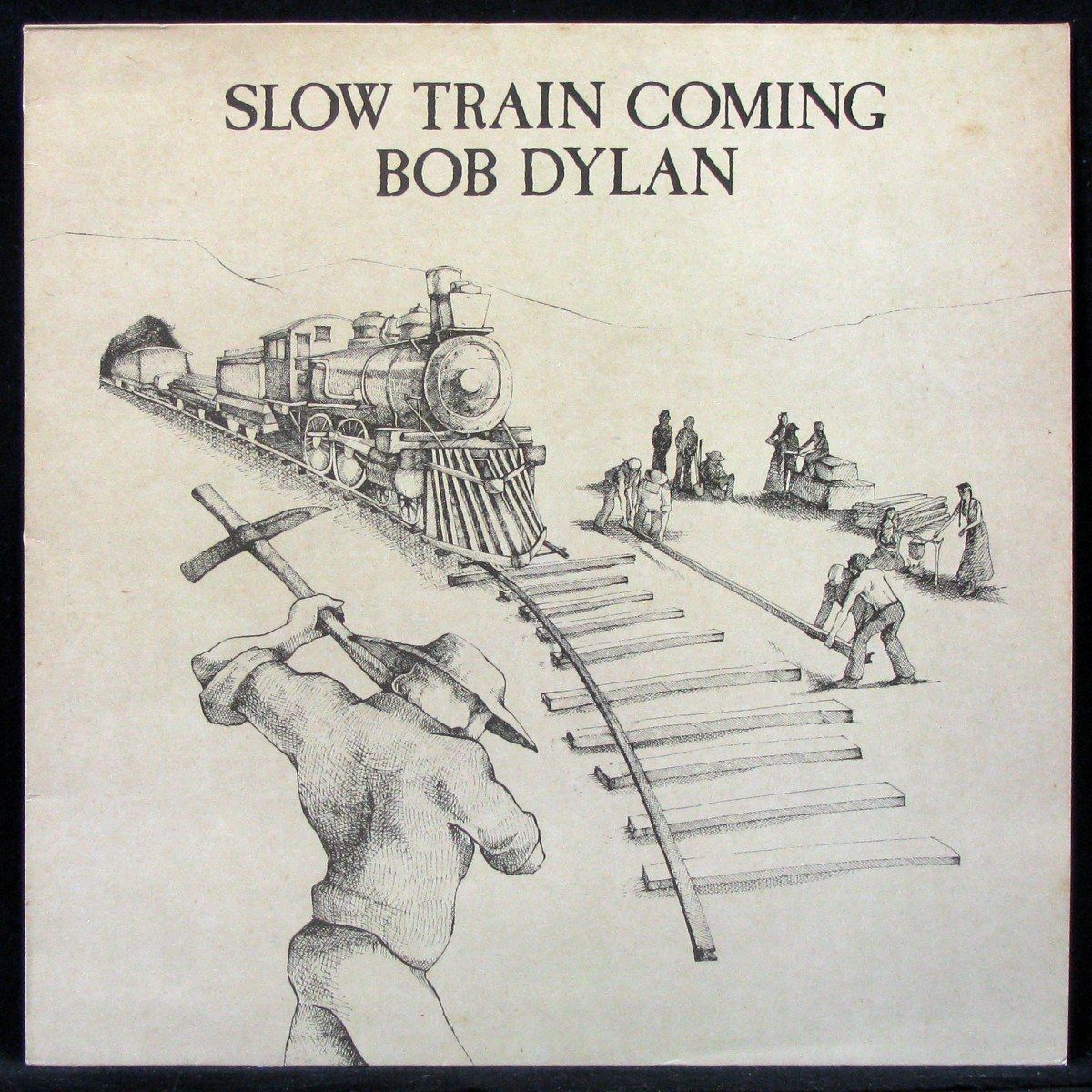
Trains have always appeared in Bob Dylan's discography, which is rooted in traditional music. For example, his debut one has three of them mentioning trains. "House of the Rising Sun" has the narrator standing with one foot on the platform and another on the train, exactly in the middle. Trains represent difficult decisions. Once you are inside that boxcar, if you decide to look back, you're turned into stone. If you get frozen in between, you quite literally die. "Man of Constant Sorrow" follows on this logic: "I'm a-bound to ride that morning railroad, perhaps I'll die upon that train". The last one, "Freight Train Blues", is the only one that explicitly deals with this image, and associates the train to all sorts of emotions, making the orphan who sings it reminisce about the train teaching him how to cry and also bringing laughter with the blow of the whistle.
If you take a look at the albums with songs that mention trains the most, you'll see that many of them are either from the late 90s onward, when Dylan was bringing up these ideas on purpose, or from the early 60s, when he was borrowing directly from traditional popular music. In fact, that applies to all but four of the top 14, one of which has a title-track named "Slow Train", as you can see in the following table.
I made an R script to get this information. Please appreciate it.
| | album | n |
| 1 | The Bootleg Series, Vol 9: The Witmark Demos: 1962-1964 (Original Release) | 4 |
| 2 | Blonde on Blonde (Original Release) | 3 |
| 3 | Bob Dylan (Original Release) | 3 |
| 4 | Self Portrait (Original Release) | 3 |
| 5 | Blood on the Tracks (Original Release) | 2 |
| 6 | Knocked Out Loaded (Original Release) | 2 |
| 7 | Modern Times (Original Release) | 2 |
| 8 | Rough and Rowdy Ways (Original Release) | 2 |
| 9 | Slow Train Coming (Original Release) | 2 |
| 10 | Tempest (Original Release) | 2 |
| 11 | The Bootleg Series, Vol 1-3: Rare & Unreleased 1961-1991 (Original Release) | 2 |
| 12 | The Bootleg Series, Vol 7: No Direction Home (Original Release) | 2 |
| 13 | The Freewheelin’ Bob Dylan (Original Release) | 2 |
| 14 | Time out of Mind (Original Release) | 2 |
The title of 1975's Blood on the Tracks may be a reference to the bleeding songs that form its body. "Simple Twist of Fate" talks about the main character feeling "the heat of the night hit him like a freight train", maybe spilling the blood that baptizes the album. Of course, it can also be a reference to "music tracks", but why not both simultaneously?
"Idiot Wind" has two beautiful references to trains: "There's a small soldier on the cross, smoke pouring out of a boxcar door", and "down the highway, down the tracks, down the road to ecstasy". A song about ending a painful relationship paints the picture of the narrator watching a soldier that has been through the same tracks that he is now over, unlikely winning a war, and leaving behind the haunting memories of the past relationship. Is that not a difficult decision?
You're on the crossroads. That's where you make the big decision. You are on highway 61 and you fall down on your knees, you ask the Lord for forgiveness and deem your soul to hell by bargaining with the devil.
And then the whistle blows. You "hang your head and cry". Back to "Folsom Prison Blues".
You are stuck in a bad decision while others are moving, freely on the train. And the whistle blows your blues away.
Dostoevsky's Notes from a Dead House portrays violent men who knew what they had done wrong. Akoulka's husband is probably the best example, having killed the only angel to pass by his life, Akoulka. But, somehow, when they do not feel as their crimes were justified and accept their guilt, these men are not monsters. They show their soul in the theater, trying to act the best way they can, when helping one another. But they also show their flaws when beating up one another or drinking until they pass out. Life is harsh.
One shoots a man in Reno just to watch him die. Another takes a shot of cocaine and shoots his woman down. In Eastern Europe, another drinks and axes his wife to death. Now they can only repent and try to live with dignity even inside of prison, against all odds. This is now their purpose.
Listen to that Duquesne whistle blowing...
I know I can't be free...
At Folsom Prison, Johnny Cash sang a song by Glen Sherley, one of the prisoners, called "Greystone Chapel". This man was living among the lowest of low-lives: murderers, drug addicts, all kinds of criminals. And he had a solution to life in prison, which he put down in the beautiful lyrics of his song. Even though "you wouldn't think that God had a place at Folsom", He "saved the souls of many lost men", and even though they are in a literal prison, "the door to the house of God is never locked".
There are men here that don't ever worship,
There are men here who scoff at the ones who pray
But I've got down on my knees in that grey stone chapel,
And I've thanked the Lord for helping me each day
Now, this grey stone chapel here at Folsom,
It has a touch of God's hand on every stone
It's a flower of light in a field of darkness,
And it's given me the strength to carry on
Inside the walls of prison my body may be,
But the Lord has set my soul free
qui, 05 fev 2026 23:41:23 -0300
The white stain of the man in black
[link—standalone]
Once again I catch myself thinking about the man in black.
A student once told me that I seemed to be fascinated with the theme of violence. Guilty as charged. That happened because I started discussing the book The Giving Tree and went into Shel Silverstein's ghostwriting work for Johnny Cash in the masterful song "25 Minutes to Go", where a prisoner counts his last minutes before meeting the gallows, and I had already previously discussed themes of violence in culture mostly using Ted Gioia's Music: A Subversive History as a source. It's not untrue. Violence is a taboo in culture, and as with any other taboo, it doesn't go away by pretending it does not exist in our daily lives.
Johnny Cash was not a gangster in any way, even if his cultural image might suggest so. Yes, he did have some passages in prison, but most of them were not serious. Actually, one of them was notoriously due to trespassing to pick some flowers on someone else's property. The other, however, still shows the scars of a man who's been through some things. At different points of his life, Cash was addicted to different substances, both downers and uppers, amphetamines (speed) and tranquilizers. Even worse, his alcoholism used to make the other addictions even worse. He never shied away from it.
He was not a violent person, but his violent personal imagery reflected in his work. Arguably his biggest song, "Folsom Prison Blues", tells the story of a man who shot another due to sheer boredom, "just to watch him die". As we all know, boredom is the root of all evil, so it should not surprise us that a bored man would do such a thing.
The narrator of the song is not a good guy that suffered some sort of injustice. Far from it, he's a villain, and he knows it. He is constantly reminded of his mistakes and how he threw it all away just to get a short rush of adrenaline. Yet, Cash makes us feel for him — it's not that hard to imagine ourselves being violent for the sake of not dealing with the deadly empty space of boredom. Doesn't silence judge us? Anything, but judgment! Do not dare to make me feel small! Anything but this hellish, finger-pointing boredom!
The contrast between Cash's life and the beauty he could find and perform — even in the most unexpected of places! — reminds me of a Tom Waits quote made immortal by Blank on Blank's animation. Regarding the constant stimulus presented by New York, often decadent, ugly and unwholesome to say the least, he says
I think it's good. It fractures you a little bit, or (...) I think it's stimulating for artists because if you're visually susceptible to images as optically, it's constantly bombarding you with a lot of information if you can take it without becoming part of it.
Cash took that information and ran with it. At times, he became part of it. It's not hard to see him giving in and turning into the character of "Cocaine Blues", one of his hits from his live album At Folsom Prison of 1968. The help of his muse June Carter was absolutely necessary, given that nobody is completely independent, but he did it. Ah, did he do it.
Prison may be seen nowadays by the law-abiding citizen as some sort of playground for violent men, but it wasn't always like that. The characters from traditional songs were violent and they had some conscience of the moral code they were trespassing, there wasn't the idea of a romantic criminal, kind of like the prisoners from Dostoevsky's Notes from a Dead House, his quasi-memoir of the long years in prison. And much like in Dostoevsky's book, Cash shows us how close the criminal is to the everyday guy, in their virtues, their flaws and their remorse. That jolt of excitement of killing someone is not worth it.
If you peek into traditional music, themes of love (or sex) and violence are abundant. But what might be left unseen but still catches my attention in "Folsom Prison Blues" is the world building. "I hear the train coming, it's rolling around the bend," he sings. The sound of trains is nostalgic in itself.
I rode a train once in my life, in Minas Gerais, going from Belo Horizonte to Governador Valadares, to the marriage of two dear friends. There is something inherently nostalgic about trains. I had never ridden one before, yet seeing the "serrinha" filled my heart for a nostalgia for something I had not yet lived, to quote the footballer.
Trains have always appeared in Bob Dylan's discography, which is rooted in traditional music. For example, his debut one has three of them mentioning trains. "House of the Rising Sun" has the narrator standing with one foot on the platform and another on the train, exactly in the middle. Trains represent difficult decisions. Once you are inside that boxcar, if you decide to look back, you're turned into stone. If you get frozen in between, you quite literally die. "Man of Constant Sorrow" follows on this logic: "I'm a-bound to ride that morning railroad, perhaps I'll die upon that train". The last one, "Freight Train Blues", is the only one that explicitly deals with this image, and associates the train to all sorts of emotions, making the orphan who sings it reminisce about the train teaching him how to cry and also bringing laughter with the blow of the whistle.
If you take a look at the albums with songs that mention trains the most, you'll see that many of them are either from the late 90s onward, when Dylan was bringing up these ideas on purpose, or from the early 60s, when he was borrowing directly from traditional popular music. In fact, that applies to all but four of the top 14, one of which has a title-track named "Slow Train", as you can see in the following table.
I made an R script to get this information. Please appreciate it.
| | album | n |
| 1 | The Bootleg Series, Vol 9: The Witmark Demos: 1962-1964 (Original Release) | 4 |
| 2 | Blonde on Blonde (Original Release) | 3 |
| 3 | Bob Dylan (Original Release) | 3 |
| 4 | Self Portrait (Original Release) | 3 |
| 5 | Blood on the Tracks (Original Release) | 2 |
| 6 | Knocked Out Loaded (Original Release) | 2 |
| 7 | Modern Times (Original Release) | 2 |
| 8 | Rough and Rowdy Ways (Original Release) | 2 |
| 9 | Slow Train Coming (Original Release) | 2 |
| 10 | Tempest (Original Release) | 2 |
| 11 | The Bootleg Series, Vol 1-3: Rare & Unreleased 1961-1991 (Original Release) | 2 |
| 12 | The Bootleg Series, Vol 7: No Direction Home (Original Release) | 2 |
| 13 | The Freewheelin’ Bob Dylan (Original Release) | 2 |
| 14 | Time out of Mind (Original Release) | 2 |
The title of 1975's Blood on the Tracks may be a reference to the bleeding songs that form its body. "Simple Twist of Fate" talks about the main character feeling "the heat of the night hit him like a freight train", maybe spilling the blood that baptizes the album. Of course, it can also be a reference to "music tracks", but why not both simultaneously?
"Idiot Wind" has two beautiful references to trains: "There's a small soldier on the cross, smoke pouring out of a boxcar door", and "down the highway, down the tracks, down the road to ecstasy". A song about ending a painful relationship paints the picture of the narrator watching a soldier that has been through the same tracks that he is now over, unlikely winning a war, and leaving behind the haunting memories of the past relationship. Is that not a difficult decision?
You're on the crossroads. That's where you make the big decision. You are on highway 61 and you fall down on your knees, you ask the Lord for forgiveness and deem your soul to hell by bargaining with the devil.
And then the whistle blows. You "hang your head and cry". Back to "Folsom Prison Blues".
You are stuck in a bad decision while others are moving, freely on the train. And the whistle blows your blues away.
Dostoevsky's Notes from a Dead House portrays violent men who knew what they had done wrong. Akoulka's husband is probably the best example, having killed the only angel to pass by his life, Akoulka. But, somehow, when they do not feel as their crimes were justified and accept their guilt, these men are not monsters. They show their soul in the theater, trying to act the best way they can, when helping one another. But they also show their flaws when beating up one another or drinking until they pass out. Life is harsh.
One shoots a man in Reno just to watch him die. Another takes a shot of cocaine and shoots his woman down. In Eastern Europe, another drinks and axes his wife to death. Now they can only repent and try to live with dignity even inside of prison, against all odds. This is now their purpose.
Listen to that Duquesne whistle blowing...
I know I can't be free...
At Folsom Prison, Johnny Cash sang a song by Glen Sherley, one of the prisoners, called "Greystone Chapel". This man was living among the lowest of low-lives: murderers, drug addicts, all kinds of criminals. And he had a solution to life in prison, which he put down in the beautiful lyrics of his song. Even though "you wouldn't think that God had a place at Folsom", He "saved the souls of many lost men", and even though they are in a literal prison, "the door to the house of God is never locked".
There are men here that don't ever worship,
There are men here who scoff at the ones who pray
But I've got down on my knees in that grey stone chapel,
And I've thanked the Lord for helping me each day
Now, this grey stone chapel here at Folsom,
It has a touch of God's hand on every stone
It's a flower of light in a field of darkness,
And it's given me the strength to carry on
Inside the walls of prison my body may be,
But the Lord has set my soul free
qui, 05 fev 2026 23:26:42 -0300